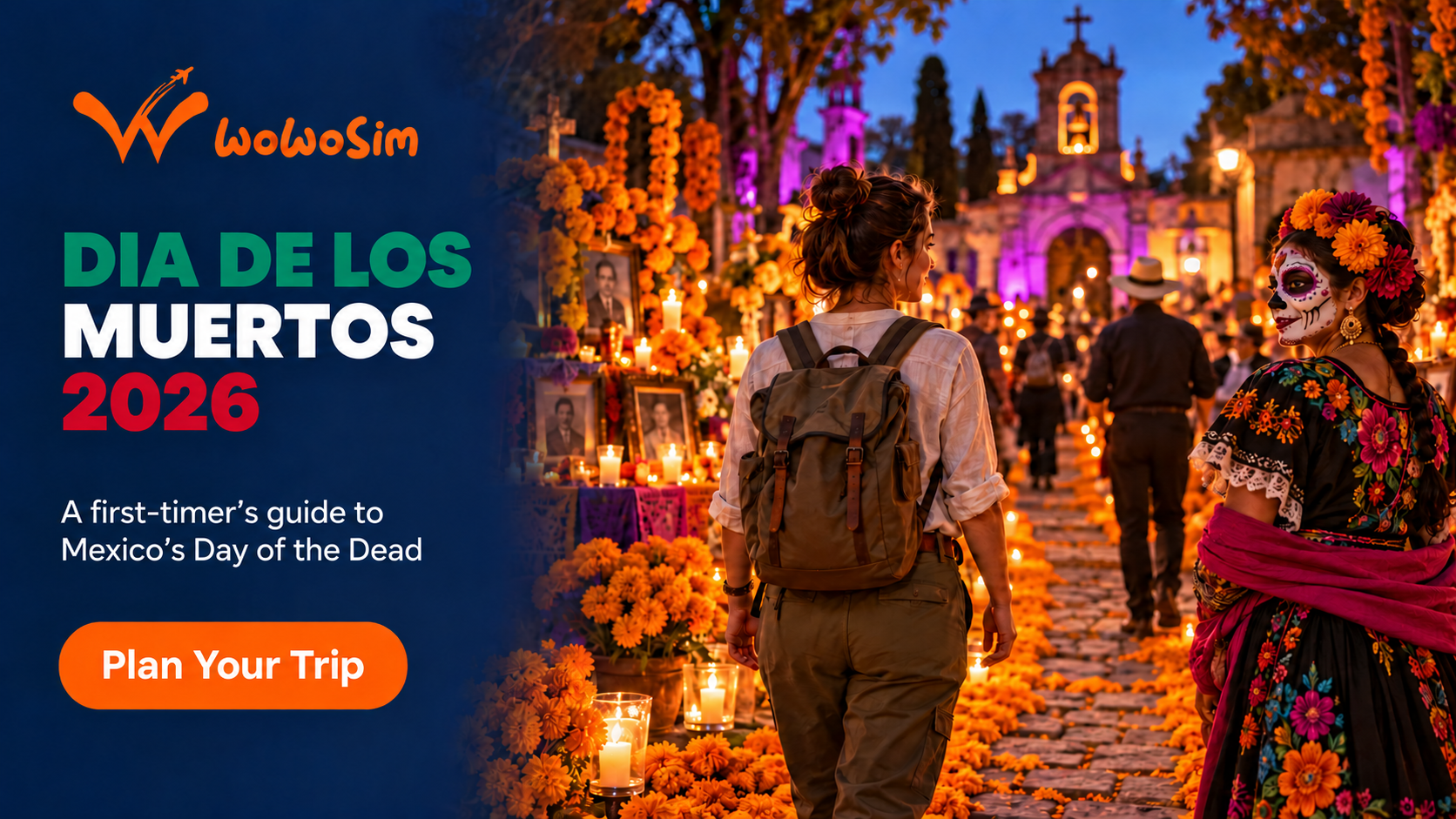
Every year, millions of people see photos of marigold-covered altars, candlelit cemeteries, and painted sugar-skull faces and think the same thing: I want to see that in person. If 2026 is the year you finally book that trip, this guide covers exactly when to go, which city fits the experience you actually want, and how to take part without turning someone else’s grief into your photo backdrop.
When Is Día de los Muertos 2026?
Día de los Muertos falls on Sunday, November 1 and Monday, November 2, 2026. Traditionally, November 1 (Día de los Inocentes or Día de los Angelitos) honors children who have passed, while November 2 (Día de los Muertos) honors adults, though in practice the celebrations across both days blend together for visitors.
Mexico City has confirmed its flagship Desfile de Día de Muertos (Day of the Dead Parade) for Saturday, October 31, 2026, starting at 2:00 PM, running from Chapultepec down Paseo de la Reforma to the Zócalo. Most experienced travelers recommend building a trip around the full window from roughly October 29 through November 2 rather than just the two official dates, since altars, markets, and smaller neighborhood events run all week.
Is Día de los Muertos the Same as Halloween?
No, and this is the single most common misunderstanding first-timers bring with them. Halloween and Día de los Muertos happen back to back on the calendar, but they come from different traditions with a different tone. Día de los Muertos is not a spooky holiday, it’s a celebration of remembrance and continued connection with loved ones who have died, built around the belief that the border between the living and the dead opens briefly so spirits can visit. Altars (ofrendas), marigolds (cempasúchil), candles, and the deceased’s favorite foods and belongings are placed out to welcome them home, not to scare anyone away.
Where to Experience It: Three Very Different Cities
Mexico City: The Big, Festive Option
Mexico City’s Desfile de Día de Muertos is the most internationally famous image of the holiday, giant alebrije puppets, towering Catrina figures, and a parade route packed with spectators along Reforma into the historic Zócalo. Beyond the parade, the city fills with public mega-ofrendas (large community altars), themed markets selling pan de muerto and sugar skulls, and museum exhibitions. This is the right choice if you want energy, crowds, and a big, photogenic spectacle, and don’t mind that it feels more like a citywide festival than an intimate ritual.
Oaxaca: The Most Traditional Option
Oaxaca runs a full week of comparsas (costumed street processions), beautifully decorated cemeteries, bustling marigold and sugar-skull markets, and regional food like mole and fresh pan de muerto. Many travelers who want to understand the holiday’s roots, rather than just see a parade, choose Oaxaca specifically because the traditions here feel lived-in and community-driven rather than staged for visitors.
Pátzcuaro and Janitzio Island: The Quiet, Spiritual Option
On the night of November 1, a candlelit procession leads from the lakeside town of Pátzcuaro in Michoacán out to Janitzio Island, where families keep all-night vigils in the island cemetery, surrounded by candlelight reflected on the lake. This is the choice for travelers who want something slower, quieter, and more solemn than a parade, closer to witnessing a real community ritual than attending an event.
How to Take Part Respectfully
Día de los Muertos has become a popular travel moment, and with that comes a responsibility not to treat it purely as a photo opportunity:
- Ask before photographing people, altars, or graves. Many families welcome visitors, but a cemetery vigil is a private moment of grief for someone, not a set piece.
- Face paint is fine in public festival spaces, but skip it at actual cemeteries and vigils, where families are visiting their own dead.
- Buy from local vendors and artisans for marigolds, sugar skulls, and pan de muerto rather than mass-produced souvenirs, it puts money directly into the communities keeping the tradition alive.
- Learn the basics beforehand. Knowing what an ofrenda represents, why marigolds are used (their scent is believed to guide spirits home), and the difference between the two days shows more respect than showing up without any context.
Día de los Muertos was inscribed on UNESCO’s Representative List of the Intangible Cultural Heritage of Humanity in 2008, recognition of the tradition’s deep cultural significance rather than its status as a tourist attraction, worth keeping in mind as you plan.
Practical Trip Planning
| City | Best for | Book hotels by |
|---|---|---|
| Mexico City | Big parade, museums, markets, nightlife | August to September |
| Oaxaca | Traditional comparsas, cemetery visits, food | August to September |
| Pátzcuaro/Janitzio | Quiet vigils, candlelit lake procession | September |
All three destinations see a major spike in hotel bookings and prices as the date approaches, and flights from the US and Canada fill up quickly for the final week of October. If you’re flexible, arriving a few days before October 31 gets you ahead of the heaviest crowds while still catching market setup and early altar displays.
Staying Connected During Your Trip
Between navigating unfamiliar cemetery and parade routes, translating menus and signage, booking last-minute rideshares in crowded city centers, and keeping in touch with your group when phone lines get congested during the biggest events, reliable mobile data matters more during a trip like this than a typical beach holiday. If you’ve traveled with an eSIM before, our guide on how to set up an eSIM on iPhone and Android covers the basics; if this is your first time, our Airalo Alternatives 2026 comparison is a good starting point for picking a plan.
FAQs: Día de los Muertos 2026
Do I need a visa to visit Mexico for Día de los Muertos?
Most visitors from the US, Canada, the UK, EU, and many other countries can enter Mexico visa-free for tourism for up to 180 days. Always confirm current requirements for your specific nationality before booking.
Is it disrespectful for tourists to wear Catrina face paint?
Wearing Catrina-style face paint at public festivals and parades is widely considered part of the celebration and welcomed. The line to be careful of is wearing it at private family altars or cemetery vigils, where it’s better to simply observe respectfully.
Which city is best for a first-time visitor?
Mexico City offers the easiest logistics, biggest international flight options, and the most English-friendly tourism infrastructure, making it the most practical first choice. Oaxaca and Pátzcuaro reward travelers who want a deeper, quieter experience and don’t mind a bit more planning.
How crowded does Mexico City get during the parade?
Extremely crowded. Expect large crowds along the entire Reforma to Zócalo route, arrive at least 90 minutes early to secure a viewing spot, and expect streets around the parade route to close to traffic for most of the day.
Can I visit more than one city during the same trip?
Yes, but distances matter. Oaxaca is roughly a 1-hour flight or 6 to 7 hour drive from Mexico City, and Pátzcuaro is about a 4-hour drive. Trying to fit all three into one trip during the single busiest week of the year is ambitious; most first-timers do better focusing on one city and doing it well.
However you choose to experience it, Día de los Muertos rewards travelers who show up curious and a little humble about a tradition that isn’t theirs, rather than just chasing the photo. WoWo Sim makes the practical side easier: instant eSIM activation before you land, so you can focus on the marigolds, the music, and the ofrendas instead of hunting for a SIM card shop on your first night in Mexico City.